Wednesday, February 04, 2009
Kimono as Art: The Landscapes of Itchiku Kubota
Kimono Exhibit Opens In Canton - Akron-Canton News Story - WEWS Cleveland: "An exhibit of kimonos considered to be artistic masterworks opens Feb. 8 at the Canton Museum of Art.
The show runs until April 26.'
preview form the exhibit

preview form the exhibit

preview form the exhibit

preview form the exhibit

preview form the exhibit

preview form the exhibit

preview form the exhibit

preview form the exhibit

preview form the exhibit
 preview form the exhibit :
Ohio.com - Special events mark Kimonofest:
see the Itchiku Kubota Video
The show runs until April 26.'
Kimono as Art: The Landscapes of Itchiku Kubota,' includes 40 oversized kimono featuring patterns inspired by nature.
Kubota spent a year creating each kimono. He had hoped to make 75 to form a tapestry of the garments, but he died in 2003 after completing 30 pieces. His family carries on his work.
The kimonos are coming to Canton because of a personal connection to W.R. Timken, a former ambassador to Germany and member of the founding family of the Timken Company, a Canton-based manufacturer of industrial products and steel. Timken visited Kubota's museum in Japan in 2004 and met the artist's son. Their acquaintance paved the way for the show in Canton."
preview form the exhibit
preview form the exhibit
preview form the exhibit
preview form the exhibit
preview form the exhibit
preview form the exhibit
preview form the exhibit
preview form the exhibit
preview form the exhibit
preview form the exhibit :Ohio.com - Special events mark Kimonofest:
"The exhibit 'Kimono as Art: The Landscapes of Itchiku Kubota' at the Canton Museum of Art has inspired a plethora of events celebrating Japanese food and culture. Here are just some of the events taking place during Kimonofest:"
see the Itchiku Kubota Video


Kimono Exhibit Opens In Canton - Akron-Canton News Story - WEWS Cleveland
Kimono Exhibit Opens In Canton - Akron-Canton News Story - WEWS Cleveland: "An exhibit of kimonos considered to be artistic masterworks opens Feb. 8 at the Canton Museum of Art.
'Kimono as Art: The Landscapes of Itchiku Kubota,' includes 40 oversized kimono featuring patterns inspired by nature.
The show runs until April 26.
Kubota spent a year creating each kimono. He had hoped to make 75 to form a tapestry of the garments, but he died in 2003 after completing 30 pieces. His family carries on his work.
The kimonos are coming to Canton because of a personal connection to W.R. Timken, a former ambassador to Germany and member of the founding family of the Timken Company, a Canton-based manufacturer of industrial products and steel. Timken visited Kubota's museum in Japan in 2004 and met the artist's son. Their acquaintance paved the way for the show in Canton."
'Kimono as Art: The Landscapes of Itchiku Kubota,' includes 40 oversized kimono featuring patterns inspired by nature.
The show runs until April 26.
Kubota spent a year creating each kimono. He had hoped to make 75 to form a tapestry of the garments, but he died in 2003 after completing 30 pieces. His family carries on his work.
The kimonos are coming to Canton because of a personal connection to W.R. Timken, a former ambassador to Germany and member of the founding family of the Timken Company, a Canton-based manufacturer of industrial products and steel. Timken visited Kubota's museum in Japan in 2004 and met the artist's son. Their acquaintance paved the way for the show in Canton."
Tuesday, February 03, 2009
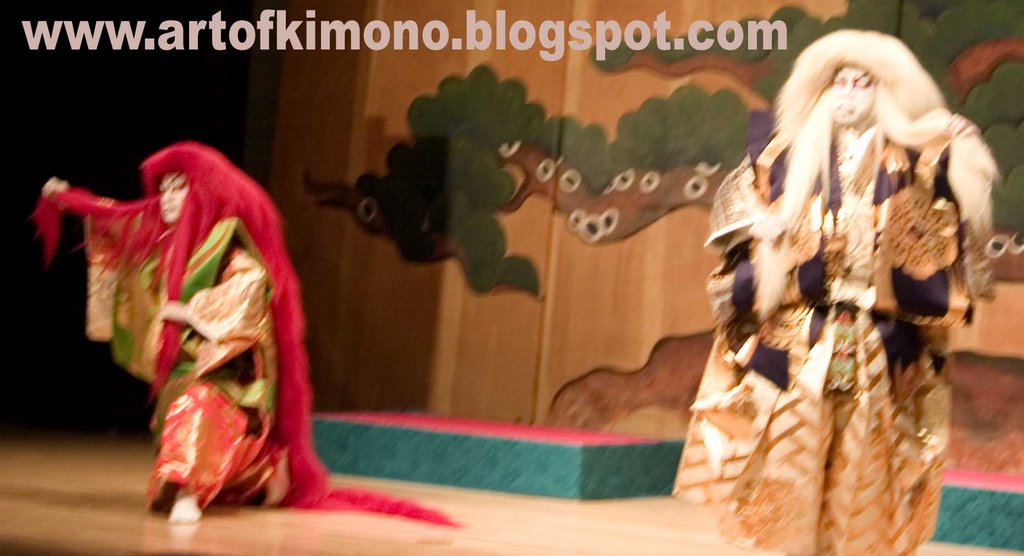
KABUKI and kimono
 I started a research on topic of kabuki thinking of series of artwork on the topic.
First I pulled out some photos I shot yeas ago at a Kabuki performance .
Second, I started my web research about kabuki and theatrical outfit for the performance.
Resources about kabuki on the web :
The best source on the kabuki topic I found on the web is www.kabuki21.com excellently organized and very extensive I am going to research this site more shortly and post my findings. For right now I just want to recommend this source to everybody who is doing research on kabuki especially KABUKI GLOSSARY
other sources :
acording to this source
Kabuki came into existence around 1603 with the arrival in Kyoto of a troupe of dancing girls led by a certain Izumo-no-Okuni, formerly a shrine maiden. Their dances created a sensation and were labelled "kabuki", which at the time meant "unorthodox" or "eccentric". Such troupes of women were subsequently banned as were those of the dancing boys that took their place.

According to Mark Oshima
Originally the word ‘kabuki’ meant something ‘off beat’ or not quite moral and began with colorfully dressed, swaggering ex-samurai, courtesans and other street people in the early Edo period. Today the word is written with characters for ‘song,’ ‘dance,’ and ‘acting.’ These are the key elements of kabuki.
Monday, December 18, 2006
Japan: Filling the God Vacuum
Japan: Filling the God Vacuum: "the Japanese love affair with all things Western means a growing number of them are trading in the traditional kimono for the big white dress and tux."
Subscribe to:
Posts (Atom)